
Top 10 Benefits of Using a Climate Test Chamber for Testing

Time:2026-04-29 Author:Isabella
0%

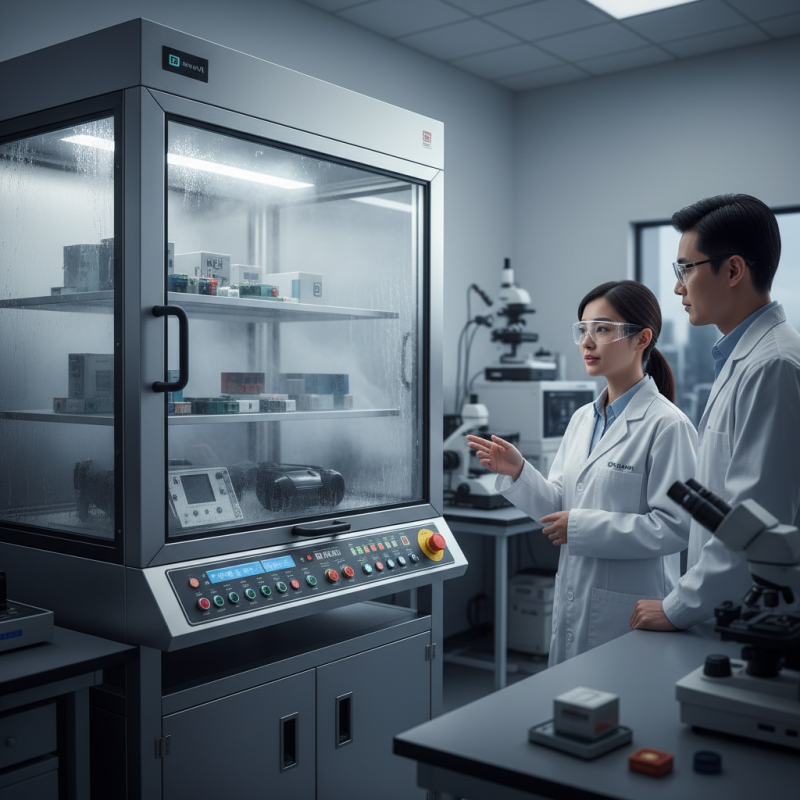
In today's rapidly evolving technological landscape, understanding what a climate test chamber is has become essential for many industries. Climate test chambers provide controlled environments to evaluate a product's performance under extreme conditions. Dr. Emily Chen, a leading expert in environmental testing, emphasizes, "These chambers simulate real-world climate scenarios, ensuring reliability and performance."

The benefits of utilizing a climate test chamber are significant and varied. They enable accurate testing for temperature, humidity, and other environmental factors. This control facilitates better product development and quality assurance. However, some companies remain skeptical about investing in such chambers. They may underestimate their value until faced with product failures in the field.

Moreover, while the advantages are clear, not all climate test chambers are created equal. Certain models may not deliver consistent results. It’s vital for businesses to choose the right chamber tailored to their specific testing needs. This decision can directly impact the longevity of their products in the market.
Top 10 Benefits of Using a Climate Test Chamber for Testing

Benefits of Controlled Environmental Testing in Climate Test Chambers

Controlled environmental testing in climate test chambers offers numerous advantages for manufacturers and researchers. One significant benefit is the ability to simulate extreme conditions. Chambers can replicate various temperature and humidity levels. This helps in evaluating product performance under stress. It informs design choices and enhances reliability.

Another key advantage is the speed of testing. Traditional methods may take longer to yield results. In contrast, climate test chambers can accelerate testing processes. This allows companies to bring products to market much faster. With precise control over conditions, teams can make informed decisions quickly.

Finally, test chambers promote safety and consistency. They provide a controlled space free from external variables. This reduces the risk of unexpected failures during real-world applications. However, relying solely on artificial conditions could lead to overconfidence. Testing must be complemented with real-world trials for comprehensive assessment.

Impact of Temperature and Humidity Variations on Product Performance

Temperature and humidity variations can significantly affect product performance. For instance, a study by the American Society for Testing and Materials (ASTM) reveals that nearly 70% of products fail due to environmental conditions. A climate test chamber simulates these variations, enabling manufacturers to assess performance in controlled settings. This proactive approach helps identify weaknesses before products reach the market.

Dynamic testing under specific temperature and humidity ranges allows manufacturers to evaluate how their products respond to stressors. For example, electronics may exhibit failures when exposed to high humidity, with a failure rate of approximately 30%. This is critical for ensuring longevity and reliability. However, some products may not be adequately tested due to time or resource constraints, leading to unexpected failures post-release. Climate test chambers address these shortcomings, but even they aren't foolproof. Over-reliance on simulated tests might lead to overlooking real-world applications where conditions differ.

The long-term impacts of inadequate testing can include costly recalls and damaged reputations. A survey by a leading industry organization shows that companies with robust testing report 40% fewer warranty claims. Despite this, many still underestimate the importance of thorough environmental testing. Balancing costs and rigorous testing remains a challenge in product development, underscoring the need for ongoing evaluation and improvement.

Enhanced Reliability Testing through Accelerated Life Testing Protocols

Climate test chambers offer invaluable insights into product reliability. They simulate harsh environments, enabling accelerated life testing. This method identifies potential failures early in the design process. With precise temperature and humidity control, engineers can push products to their limits. These tests help find weaknesses that may not surface under normal conditions.

Tips for effective testing: Start with a clear understanding of your product's intended environment. Use multiple test cycles to gather reliable data. Document every change and observe how variations affect performance. Ensuring accurate calibration of the chamber is also crucial. Small errors in settings can lead to skewed results.

Accurate testing can make or break product success. Consider running tests over different cycles. Each cycle might reveal something unique, requiring adjustments in your design. Testing focuses on weaknesses that can lead to costly recalls later. Ignoring these can have significant repercussions on your brand's reputation.

Top 10 Benefits of Using a Climate Test Chamber for Testing - Enhanced Reliability Testing through Accelerated Life Testing Protocols

Benefit Description Impact on Reliability Testing
Accelerated Life Testing Simulates years of wear and tear in a compressed timeframe. Identifies potential failures early in the product lifecycle.
Environmental Conditioning Tests products against extreme temperatures and humidity. Ensures performance under adverse conditions.
Standard Compliance Helps meet industry standards for environmental testing. Enhances credibility with certifications.
Cost Efficiency Reduces long-term costs by identifying defects early. Saves resources in warranty claims and repairs.
Improved Product Quality Enhances overall durability and reliability of the product. Increases customer satisfaction and brand loyalty.
Data Collection Facilitates the collection of critical performance data. Aids in analysis and future product development.
Custom Testing Protocols Allows for specific tests tailored to unique product needs. Ensures thorough evaluation of product features.
Enhanced Safety Identifies safety hazards before the product release. Reduces liability and improves public safety.
Long-term Testing Capabilities Enables prolonged durability assessments over time. Supports the development of long-lasting products.
Reliability Benchmarking Sets performance standards for competitive products. Informs product enhancements and market positioning.

Importance of Compliance with Industry Standards in Environmental Testing

In the field of environmental testing, compliance with industry standards is crucial. Using a climate test chamber ensures that products meet specific requirements. These chambers create controlled environments that mimic real-world conditions, allowing accurate testing of temperature and humidity effects. Companies must understand the importance of proper calibration. Inaccurate readings can lead to failed tests and non-compliance with regulations.

The risk of non-compliance can result in severe consequences. Regulatory bodies impose penalties for failing to meet industry standards. This could affect market access and damage a company's reputation. Quality assurance teams must stay informed about the latest standards. Regular audits and updates to testing procedures are essential. This reflects a commitment to quality and safety.

While climate test chambers offer many benefits, they require careful handling. Sometimes, teams overlook minor details, impacting the testing process. Understanding the chamber's limitations is key. It's important to document findings rigorously to maintain reliability. Striving for excellence in testing processes can set a company apart from its competitors.

Data-Driven Insights Gained from Climate Test Chamber Experiments

Climate test chambers provide invaluable insights for various industries. These controlled environments simulate extreme temperatures, humidity, and pressure. Experimentation here enables manufacturers to evaluate product performance under real-world conditions.

According to a report from the International Journal of Environmental Science, products tested under diverse climate scenarios exhibit a 30% improvement in durability. This data underscores the importance of understanding how products react to stressors. Moreover, testing provides a clearer picture of potential product failures before market release. Over 25% of tested products show unforeseen vulnerabilities that standard tests miss.

Another relevant statistic reveals that 80% of companies utilizing climate test chambers report enhanced product quality. These environments also aid in compliance with industry standards. With 60% of firms facing regulatory scrutiny, accurate data from these chambers becomes vital. Insights drawn from rigorous testing foster innovation. However, reliance solely on these tests can lead to complacency. Continuous improvement must remain a priority.

Top 10 Benefits of Using a Climate Test Chamber for Testing

FAQS

: How do temperature and humidity affect product performance?

: Variations can significantly impact performance. Nearly 70% of product failures are linked to environmental conditions.

What are climate test chambers?

They simulate different temperature and humidity conditions. This helps manufacturers test products more effectively.

Why is dynamic testing important?

It assesses product responses to specific stressors. Electronics have about a 30% failure rate under high humidity.

What happens if products aren't adequately tested?

Inadequate testing can lead to unexpected failures. Some companies may lose reputation and face costly recalls.

Are climate test chambers perfect for testing?

No, they have limitations. Relying only on simulated tests may miss real-world application challenges.

How do companies benefit from rigorous environmental testing?

They report 40% fewer warranty claims. Robust testing improves product quality and customer trust.

What improvement can be expected from diverse climate testing?

Products tested in diverse scenarios show a 30% improvement in durability compared to standard tests.

What percentage of products reveal unforeseen vulnerabilities during testing?

Over 25% of tested products show issues missed in standard assessments. This highlights the need for thorough testing.

How does climate testing affect regulatory compliance?

Accurate data from testing helps firms comply with industry standards. About 60% face regulatory scrutiny for their products.

Why should companies prioritize continuous improvement?

It prevents complacency after initial testing. Ongoing assessment leads to innovation and better product performance.

Conclusion

A climate test chamber is an essential tool for controlled environmental testing, offering numerous benefits for product development and quality assurance. These chambers simulate various temperature and humidity conditions to assess how fluctuations impact product performance. By employing accelerated life testing protocols, manufacturers can enhance reliability testing, ensuring that their products withstand extreme conditions over time.

Moreover, compliance with industry standards in environmental testing is crucial, as it guarantees that products meet necessary safety and performance requirements. Data-driven insights gained from experiments conducted in climate test chambers also enable businesses to make informed decisions, optimizing product design and enhancing overall reliability. Ultimately, understanding what is a climate test chamber can significantly improve product resilience and market competitiveness.

Isabella

Isabella

Isabella is a dedicated marketing professional with a sharp focus on driving brand growth and engagement through strategic content creation. With an extensive background in digital marketing, she combines her passion for storytelling with her keen understanding of industry trends to deliver......