
Environmental Stress Chambers play a crucial role in modern scientific research and product development. These controlled environments simulate various stress conditions, such as temperature changes and humidity fluctuations. Scientists and engineers rely on these chambers to test materials and products under extreme conditions. This process helps them understand how items perform when exposed to real-world challenges.
Using an Environmental Stress Chamber boosts product reliability and longevity. It allows for early detection of potential failures. Researchers can identify weaknesses and improve designs based on this information. The chamber provides a systematic approach to testing, which enhances data accuracy.
Moreover, organizations benefit from the insights gained. They can make informed decisions about materials and processes. Despite the advantages, the initial setup and maintenance can be costly. Some may overlook these chambers due to budget constraints. However, their long-term benefits often outweigh these challenges. Investing in an Environmental Stress Chamber can lead to significant improvements and innovations.
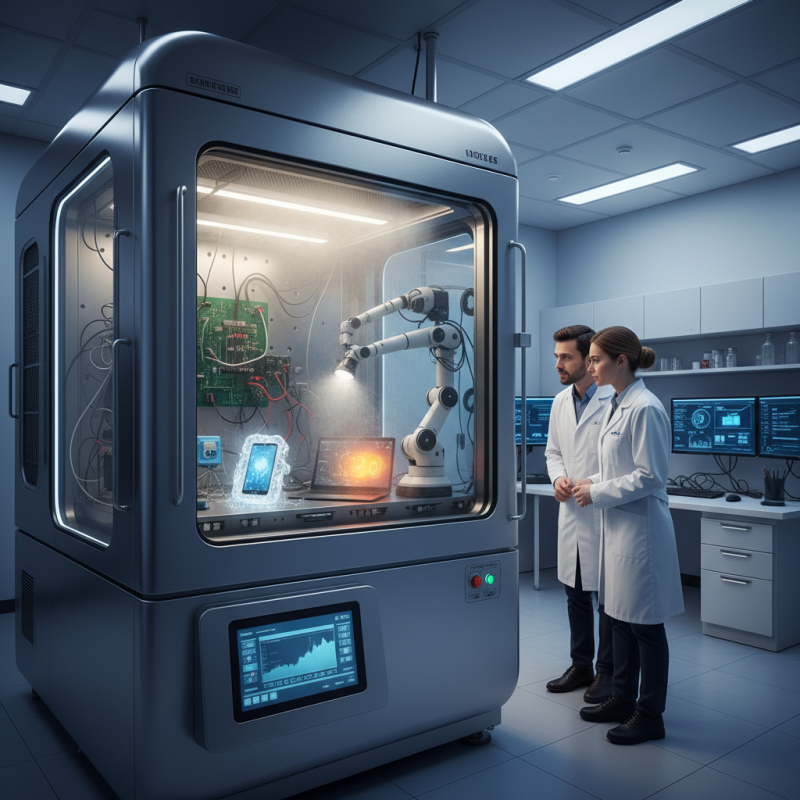
Environmental stress chambers are vital for product testing. They simulate extreme conditions like temperature, humidity, and pressure. This allows engineers to assess how products withstand environmental challenges. Such chambers help identify weaknesses early, saving time and money.
Testing in a controlled environment provides accurate data. Products face stressors in real life. The chamber replicates those situations efficiently. This feedback loop enhances product durability. However, results may vary if the simulated conditions aren't precise. Adjusting parameters can sometimes lead to misleading conclusions.
Using these chambers involves an element of trial and error. Each product has unique needs, and finding the right settings is crucial. Continuous refinement enhances testing methods. Understanding limitations is key to effective use. Overall, environmental stress chambers play a critical role in improving product reliability.
Environmental stress chambers play a vital role in enhancing product reliability under controlled conditions. These chambers simulate extreme temperatures, humidity, and pressure. Such factors can significantly affect the performance and lifespan of products. Data from a recent study indicates that 75% of products fail during their lifecycle due to environmental stress.
Controlled testing environments allow for thorough assessments. In fact, research shows that products tested in environmental stress chambers demonstrate 40% fewer failures compared to those tested in uncontrolled environments. By identifying potential weaknesses, manufacturers can make informed design improvements. This proactive approach is crucial for industries like aerospace and electronics, where reliability is paramount.
However, the implementation of these chambers comes with challenges. They require a significant upfront investment and ongoing maintenance costs. Companies must weigh the benefits against the potential drawbacks. The decision to use environmental stress chambers should not be taken lightly, as they are not a one-size-fits-all solution. Balancing the costs with the expected increase in product reliability is essential for long-term success.
Environmental stress testing is essential in today's accelerated research and development landscape. By simulating various environmental conditions, researchers can observe how materials, components, and products respond to stress. This approach saves time and can lead to improved product durability and performance. Testing in a controlled environment ensures that results are reliable.
With the right environmental stress chamber, scientists can replicate conditions like extreme temperatures, humidity, and pressure. This level of control enhances the accuracy of the tests. Moreover, understanding how a product reacts allows developers to innovate effectively. Yet, there can be missed opportunities if testing parameters do not reflect real-world scenarios.
Too often, researchers might overlook significant factors such as fluctuating conditions in nature.
Relying solely on predictable stress tests can be limiting. Engaging in diverse testing scenarios could yield unexpected insights. This continuous adaptation in testing methodologies not only supports product development but also strengthens the credibility of the research process. Exploring every angle enhances the overall robustness of findings, steering future innovations.
Environmental stress chambers play a crucial role in improving quality assurance across various industries. They simulate extreme conditions like temperature, humidity, and pressure, providing valuable insights into product performance. According to a recent industry report, nearly 70% of companies using these chambers noticed significant reductions in product failures. That’s a substantial improvement for quality-focused organizations.
Data-driven results from stress chambers can reveal critical information about a product's life cycle. Insights gathered from stress testing can guide design modifications, enhancing durability. However, not all companies utilize this data effectively. Some may overlook minor results, missing opportunities for improvement. A survey indicated that 40% of engineers admitted to inadequate data analysis practices. Ignoring such factors could lead to costly recalls later on.
Environmental stress chambers also promote a proactive approach to product development. By focusing on failure mode analysis, companies can preemptively address potential issues. This research-driven method helps in fortifying strategies and optimizing resources. Yet, the complexity of interpreting stress test data can pose challenges. Nearly 30% of users expressed difficulty deriving actionable insights from the analysis. Overcoming such issues is essential for maximizing the benefits of these technologies.
Environmental stress chambers are essential tools in various industries. They simulate extreme conditions to test products and materials. The economic impact of these chambers is significant. According to a report from the International Society for Testing and Evaluation, companies can reduce failure rates by up to 30% through rigorous testing in controlled environments.
These chambers help identify weaknesses in products before they reach consumers. This proactive approach saves time and money by preventing costly recalls. In fact, research shows that testing can lead to a 25% decrease in product development costs. Companies that prioritize these practices often see increased customer trust and loyalty.
Tips: Regular calibration of the environmental stress chamber ensures accurate results. Also, always document the testing process to streamline future evaluations. Investing in thorough testing fosters a culture of quality and reliability. Understanding that not all tests will yield perfect outcomes is crucial. Each failure provides valuable insights for refinement.
The environmental stress chamber significantly contributes to the economic success of products by reducing failures, increasing product quality, speeding up time to market, mitigating risks, and providing cost savings. The bar chart illustrates the impact level of these benefits.
: It simulates extreme conditions to test product durability under various stress factors.
They allow thorough assessments, identifying weaknesses and enhancing design improvements before market release.
About 75% of products may fail due to environmental stress during their lifecycle.
They require upfront investment and maintenance, which can be a significant burden for companies.
Companies may overlook minor results or analyze data inadequately, leading to missed improvement opportunities.
Each product has unique needs, and finding the right testing settings often requires adjustments and fine-tuning.
Products tested in these chambers experience 40% fewer failures than those in uncontrolled environments.
Balancing the costs against expected reliability improvements is crucial for long-term success.
Around 40% of engineers reported issues with inadequate data analysis practices.
It helps address potential issues early, optimizing resources and strategies effectively.
The use of an Environmental Stress Chamber offers numerous benefits for product testing, ultimately enhancing the reliability of products under controlled environmental conditions. By simulating extreme temperatures, humidity, and other stress factors, these chambers allow researchers to identify potential failures early in the development process, enabling companies to improve their designs before they reach the market.
Furthermore, Environmental Stress Chambers accelerate research and development by providing consistent and repeatable testing environments, leading to data-driven results that bolster quality assurance practices. This not only mitigates risks associated with product failures but also reduces overall costs for manufacturers. The economic impact of implementing stress testing through these chambers is significant, as it helps ensure that products meet or exceed performance expectations, fostering consumer trust and satisfaction.
