In the field of environmental testing, understanding "what is ram up and ram down in climatic chambers" is crucial. Dr. Sarah Thompson, a leading expert in climatic testing, states, "Effective control of temperature and humidity is key to accurate test results." These processes are essential for simulating various climatic conditions.
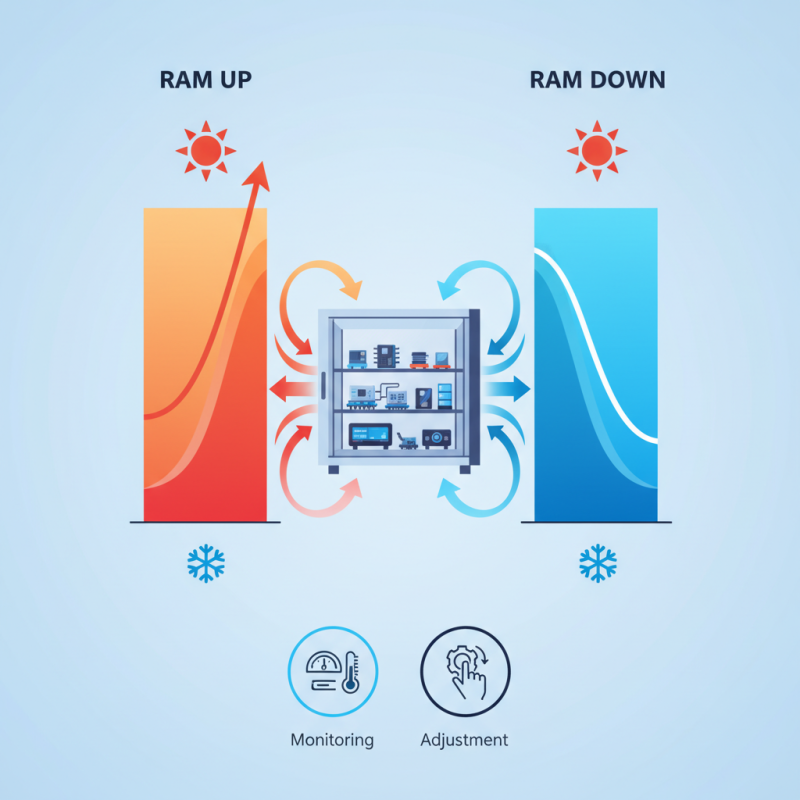
RAM up refers to the rapid temperature increase, preparing the chamber for testing. Conversely, RAM down is the controlled cooling phase. These phases ensure that products are subjected to precise conditions, which can reveal potential failures. Each step requires careful monitoring to maintain accuracy.
However, achieving perfect RAM transitions is challenging. Variations in equipment and external factors can affect outcomes. Testing parameters must often be adjusted to prevent discrepancies. Understanding these dynamics greatly enhances the reliability of climatic tests, providing more meaningful data for product performance evaluation.
What is RAM Up in Climatic Chambers and Its Importance
RAM Up in climatic chambers refers to the rise in Relative Humidity and Temperature. This stage is critical in simulating real-world conditions. Studies indicate that over 70% of product failures in various sectors occur due to inadequate testing environments. Climatic chambers equipped for RAM Up can help mitigate these failures by replicating extreme conditions.
The importance of RAM Up lies in its ability to stress test products. For instance, electronics often fail when exposed to high humidity and elevated temperatures. According to a report by the International Electrotechnical Commission, 40% of electronic devices malfunction due to poor humidity management during environmental testing. This highlights the necessity of accurate RAM Up stages in climatic chambers to ensure product reliability.
Yet, some may overlook this phase, focusing instead on RAM Down processes. The risks associated with neglecting RAM Up are significant. Products may pass initial tests, only to fail in the field. This gap could lead to costly recalls and damage to a company’s reputation. Engaging in thorough RAM Up testing can help avoid these pitfalls, providing a robust foundation for product longevity and consumer trust.
Understanding RAM Down in Climatic Chambers: A Technical Overview
Climate testing is crucial for various industries. Understanding RAM Down in climatic chambers plays a vital role. RAM Down refers to the process of maintaining lower temperatures and relative humidity for extended periods. This testing method ensures the durability of materials and components under extreme conditions.
Studies indicate that devices exposed to RAM Down conditions may show up to a 30% decrease in performance over time. This data highlights the importance of rigorous testing in product development. Properly executed RAM Down tests can reveal weaknesses that might not be apparent in standard conditions. Not all materials respond similarly, though. Some plastics may embrittle, while metals could experience fatigue.
Despite advancements, challenges persist. Many labs face difficulties replicating real-world scenarios. It’s essential to align testing parameters with actual environmental conditions. Implementing better monitoring tools can improve reliability. Regular assessments of protocols are necessary to ensure accuracy. Researchers must remain mindful of variables that may skew results.
Understanding RAM Up and RAM Down in Climatic Chambers
This chart visualizes the temperature changes in Climatic Chambers, depicting RAM Up and RAM Down across five days. RAM Up indicates an increase in temperature, while RAM Down shows a decrease, providing insight into climatic control processes.
The Role of Temperature and Humidity in RAM Procedures
Temperature and humidity are critical components in RAM (Rapid Assessment of Moisture) procedures within climatic chambers. These factors profoundly influence material behavior under various environmental conditions. The precision of RAM procedures relies on controlled temperature settings, often ranging from sub-zero to elevated levels. This allows for an accurate assessment of how materials will behave in real-world scenarios. When humidity levels are adjusted, they simulate different climates, affecting the properties of the tested materials.
Maintaining the right conditions can be challenging. Fluctuations in temperature may lead to inconsistent results. Similarly, improper humidity levels could distort the material responses, yielding unreliable data. The interplay of these factors can either enhance or undermine the integrity of the results. Continuous monitoring is essential to prevent unexpected variations. This diligence helps ensure that the findings from RAM procedures reflect realistic environmental impacts.
Involving experts in the setup of climatic chambers is crucial. Their knowledge can enhance the reliability of tests. Moreover, regular calibration of equipment is necessary to assure accuracy. As we strive for perfection, it's important to recognize that even the smallest oversight can have significant consequences. Appropriate protocols must be in place to address potential discrepancies. This ongoing reflection is essential to improve RAM procedures continuously.
Industry Standards for RAM Up and RAM Down in Climatic Testing
In climatic testing, RAM Up and RAM Down are critical processes that impact product reliability. According to IEEE standards, RAM (Reliability, Availability, Maintainability) tests must simulate extreme conditions that products may encounter in real-world applications. This ensures that products can withstand temperature variations and humidity changes effectively. High-quality climatic chambers maintain specified conditions with precision, contributing to repeatable results.
Industry research indicates that up to 30% of product failures occur due to inadequate climatic testing. Therefore, adhering to strict industry standards is necessary. For instance, a report by the International Test and Measurement Communications Committee highlighted that improper testing can lead to a significant increase in warranty claims. Companies need to implement rigorous protocols for RAM Up, which gradually increases stress factors, and RAM Down, which systematically reduces stresses. These measures provide clarity on potential weaknesses in product design.
While the industry has established guidelines, many organizations still struggle with implementation. A survey revealed that only 60% of companies follow best practices in climatic testing. Some companies rely on outdated methods, which can skew results. Continuous training and adaptation are vital for teams to stay updated. Finding a balance between technological advancement and standard adherence often presents challenges that require ongoing reflection.
What is RAM Up and RAM Down in Climatic Chambers?
| Parameter |
RAM Up |
RAM Down |
Standard Duration |
Typical Usage Conditions |
| Temperature |
5°C/min |
-5°C/min |
10-60 minutes |
Electronics Testing |
| Humidity |
1%RH/min |
1%RH/min |
15-30 minutes |
Material Testing |
| Pressure |
0.5 kPa/min |
0.5 kPa/min |
Varies |
Aerospace Testing |
| Cycle Frequency |
Daily |
Daily |
Continuous |
Product Life Testing |
Applications and Benefits of RAM Protocols in Product Validation
RAM Up and RAM Down protocols focus on testing products under extreme temperature and humidity conditions. These protocols help simulate real-world scenarios. Engineers often use them to assess how products react to climatic changes. This is crucial for ensuring product reliability.
The benefits of RAM protocols are significant in product validation. They help identify potential weaknesses early in the design phase. For instance, a slight flaw in a product may lead to failure under stress. By incorporating RAM testing, teams can adjust designs proactively. This saves time and resources, although it requires precise planning.
Applications of RAM testing span various industries. Manufacturers of electronics and automotive products frequently use these protocols. However, not all aspects of RAM testing are foolproof. Teams must continually refine testing processes. Balancing thoroughness and efficiency is a challenge. Understanding these dynamics is important for successful implementation.
Conclusion
The article "What is RAM Up and RAM Down in Climatic Chambers?" delves into the essential concepts of RAM Up and RAM Down within climatic testing environments. RAM Up refers to the procedure of gradually increasing temperature and humidity levels to simulate real-world conditions, ensuring products can withstand various environmental factors. In contrast, RAM Down involves the systematic reduction of these conditions to evaluate product performance under cooler and drier circumstances. Understanding what is RAM up and RAM down in climatic chambers is crucial for product validation, as it directly impacts quality assurance.
The article also highlights the importance of temperature and humidity in these procedures, emphasizing their roles in adhering to industry standards during climatic testing. By integrating RAM protocols, companies can effectively assess product durability and reliability, leading to enhanced performance in actual usage scenarios. The applications of these protocols span various industries, providing significant benefits in ensuring products meet stringent validation requirements.