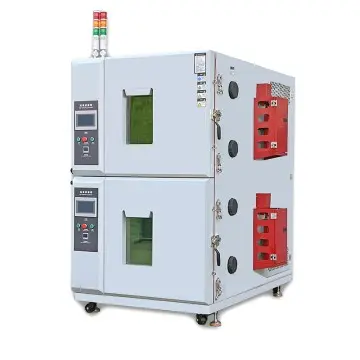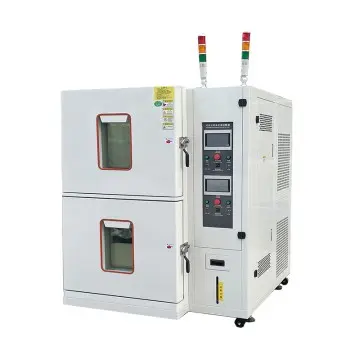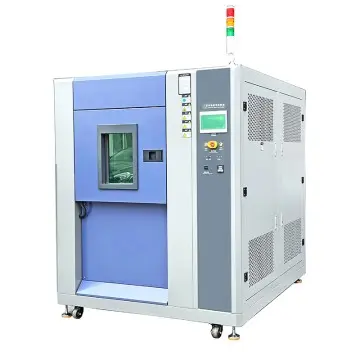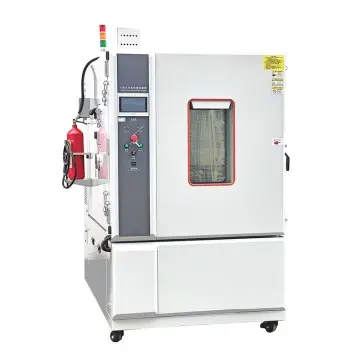
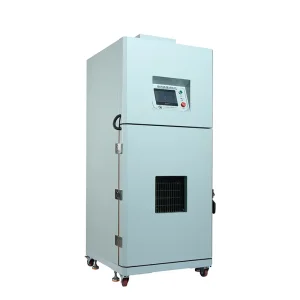
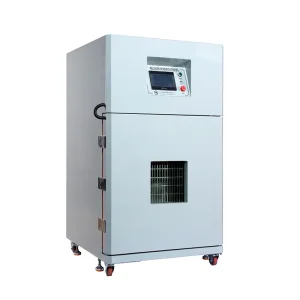
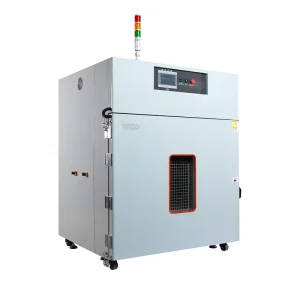
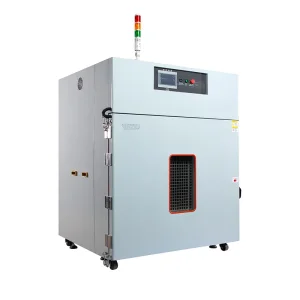
Explore our advanced regulatory validation platforms configured for EV and ESS battery packs.
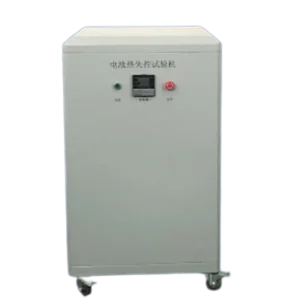
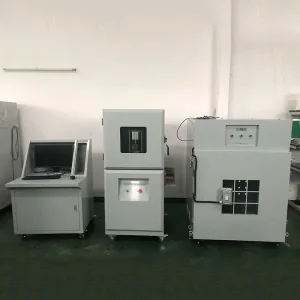
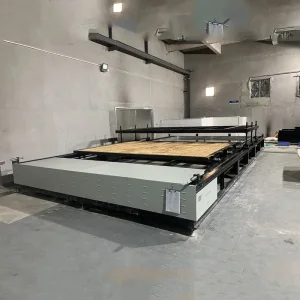
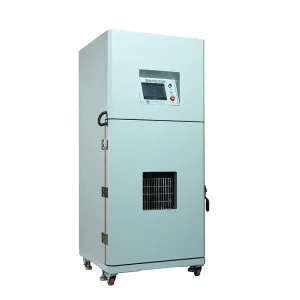
See you at green world!
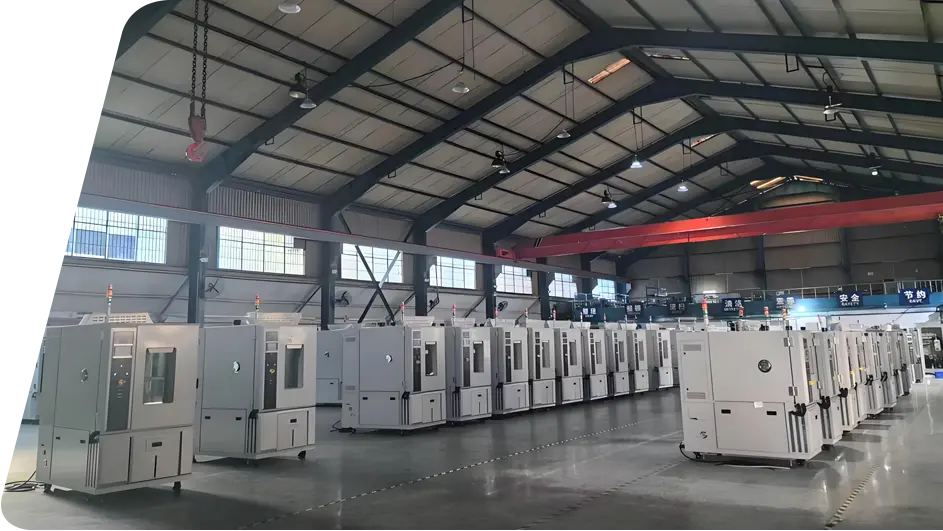
Advancing from cell-level validation to full-scale vehicle and pack-level fire resistance verification.
As the global automotive industry transitions from traditional combustion engines to electric vehicle architectures, battery safety protocols have undergone a paradigm shift. The integration of Cell-to-Pack (CTP), Cell-to-Chassis (CTC), and structural battery solutions means that evaluating cell-level thermal runaway behavior in isolation is no longer sufficient. Comprehensive validation requires exposing the complete vehicle-level battery pack assembly to external fire hazards.
"Modern safety regulations demand that vehicle-level fire testing platforms accurately simulate real-world thermal abuse scenarios. This includes fuel leaks, battery casing puncture-induced fires, and extreme external heat sources to ensure occupants have sufficient evacuation time."
During an external fire, the structural integrity of the battery enclosure, the performance of phase-change materials (PCMs), and the resilience of multi-layer thermal barriers are evaluated under extreme radiative and convective heat fluxes. The goal is simple yet critical: prevent immediate propagation and minimize the risk of explosion, complying with standards such as UN ECE R100.03, GB 38031-2020, and UL 2580.
A deep dive into the engineering mechanisms behind modern high-precision fire testing machines.
A premium Vehicle-Level External Fire Testing Machine relies on exact controls to deliver uniform heat across large battery enclosures. Unlike simple open-flame systems, industrial-grade test equipment uses LPG/CNG gas burner matrixes or specialized liquid fuel pans to generate uniform heat fluxes matching real fire curves.
| Core System Parameters | Technical Specification Details | Regulatory Alignment |
|---|---|---|
| Preheat Phase Temperature | Exceeding 600°C within 30 seconds | GB 38031 / UN ECE R100 |
| Direct Fire Exposure (Phase A) | 70 seconds of direct exposure to flame contact | Standard compliance requirement |
| Indirect Fire Exposure (Phase B) | 60 seconds of indirect thermal radiation coverage | Standard compliance requirement |
| Heat Flux Measurement Range | 0 to 150 kW/m² with high-precision sensors | ISO 19453 / SAE J2464 |
| Fuel Supply Automation | LPG/Propane mass flow control with safety valves | TÜV / CE Mark compliance |
Safety remains the primary design consideration. Modern testing machines incorporate isolated explosion-proof control rooms, integrated carbon-steel containment walls, gas detection modules (monitoring CO, H2, and hydrocarbons), and advanced industrial scrubbers to treat post-combustion exhaust gases prior to atmospheric release.
Understanding the strict purchasing standards of tier-1 automotive groups and third-party laboratories.
OEMs require test enclosures that accommodate varying dimensions of skateboard chassis and structural battery packs, demanding modular loading tracks and customizable blast-resistant rooms.
Active safety logic loops, emergency water-deluge setups, remote ignition, and nitrogen purge options are required to protect valuable lab infrastructure from thermal runaways.
Testing requires high-speed thermal cameras and multi-channel thermocouple systems to monitor transient temperature changes during intense heat exposure phases.
Combining mechanical, environmental, and thermal safety testing into a unified engineering workflow.
Leading test facilities do not run fire tests in isolation. A complete product development cycle requires subjecting battery packs to a series of mechanical, environmental, and thermal stresses. A typical test program often routes a battery through several consecutive phases:
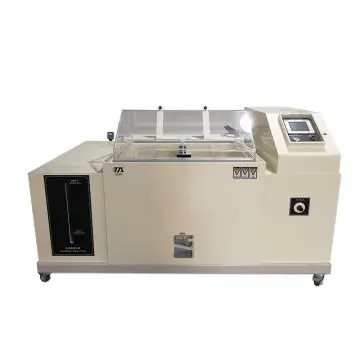
Mechanical Vibration & Structural Stress → High-Rate Thermal Cycling → Salt Spray Ingress Corrosion → High-Current Short-Circuiting → External Fire Exposure Validation.
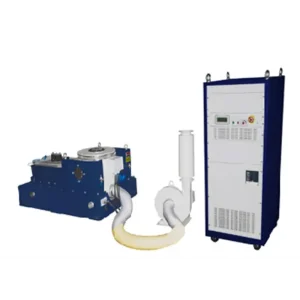
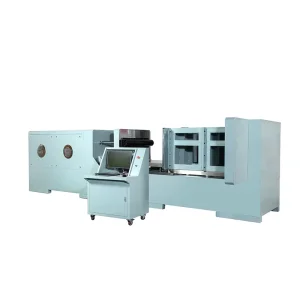
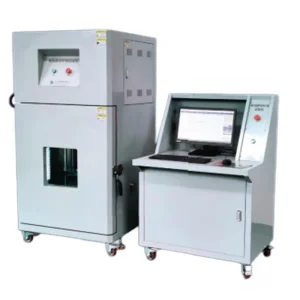
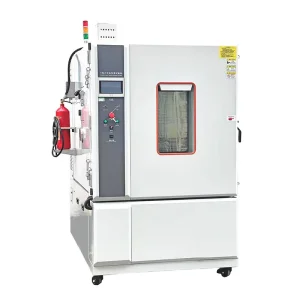
Taian Intelligent Equipment addresses these complex test plans by offering fully integrated testing systems. By pairing environmental walk-in chambers with impact test structures, vibration tables, and fire rooms, manufacturers can execute end-to-end certification under a single control architecture.
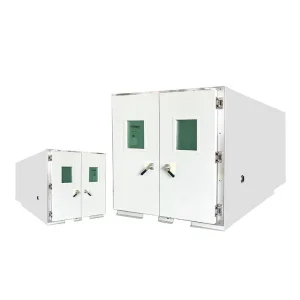
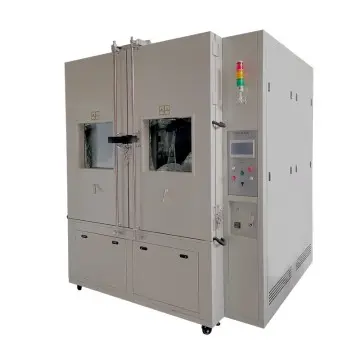
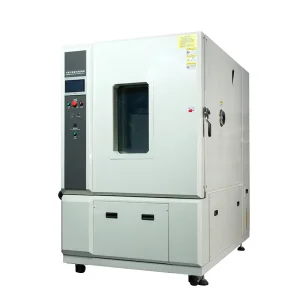
High-precision chambers designed to test batteries under extreme temperature, humidity, vibration, and dust environments.
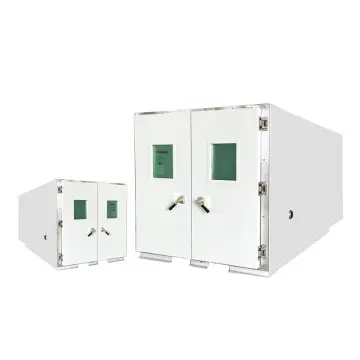
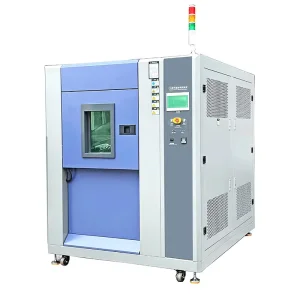
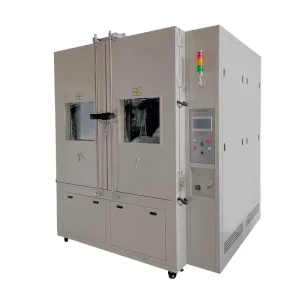
Ensuring compliance with global vehicle safety metrics and providing ongoing regional support.
Deploying high-energy fire chambers requires local safety certifications and regulatory alignment. Testing equipment must satisfy regional industrial codes, such as NFPA 855 in the United States, ATEX directives in Europe, and CE markings for safety control circuits.
Our systems undergo regular flame temperature calibration using NIST-traceable multi-point thermocouple setups, ensuring repeatable flame exposure values.
Taian provides engineering assistance from site layout planning to exhaust duct installation, helping testing facilities clear environmental and safety reviews.
Integrated data logging tracks gas valves, burners, and exhaust flow rates, sending alerts to technicians before component wear affects testing accuracy.
Exploring the next generation of solid-state battery testing and dynamic hydrogen safety systems.
The automotive sector is moving toward solid-state batteries and hydrogen fuel cells, bringing new safety validation needs. Future testing platforms must adapt to higher ignition points, unique gas emission profiles (such as fluorine compounds from solid polymer interfaces), and fast pressure releases.
To meet these demands, Taian's development roadmap focuses on:
Answers to common technical questions about external fire testing standards, operations, and equipment design.
Direct fire exposure (Phase A) places the battery pack directly in the path of open flames, simulating a fuel fire directly under the vehicle chassis. Indirect fire exposure (Phase B) uses a sliding screen or moves the burner away to expose the pack primarily to radiant heat. This simulates the residual thermal radiation from nearby fires.
LPG/propane burner setups allow precise regulation of gas flow, flame height, and local temperature, making them highly repeatable for laboratory testing. Fuel pan tests using heptane or gasoline represent realistic fire behaviors but are more difficult to control, clean, and run in sequence due to fuel residues.
Our fire chambers feature blast-resistant panels, armored inspection glass, remote control stations, automated nitrogen purge valves, and thermal imaging cameras. Operators can monitor and control the entire fire exposure process from a safe distance behind reinforced barriers.
Yes. Our combustion platforms can be customized to align with UL 9540A testing procedures for commercial energy storage systems. This includes adding high-resolution gas collection manifolds and integrating mass loss load cells to track real-time changes in sample weight.
Follow our latest tech updates, exhibition news, and battery testing insights.
 Shanghai
 Mar 2026
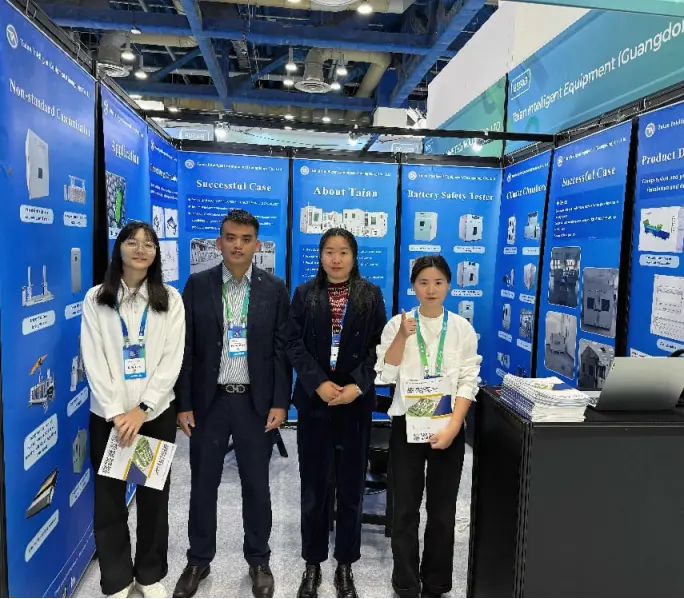
Taiantest has officially announced it will showcase its latest battery testing equipment, highlighting environmental validation chambers designed for EV development.
 Shanghai
Mar 2026
Shanghai
Mar 2026
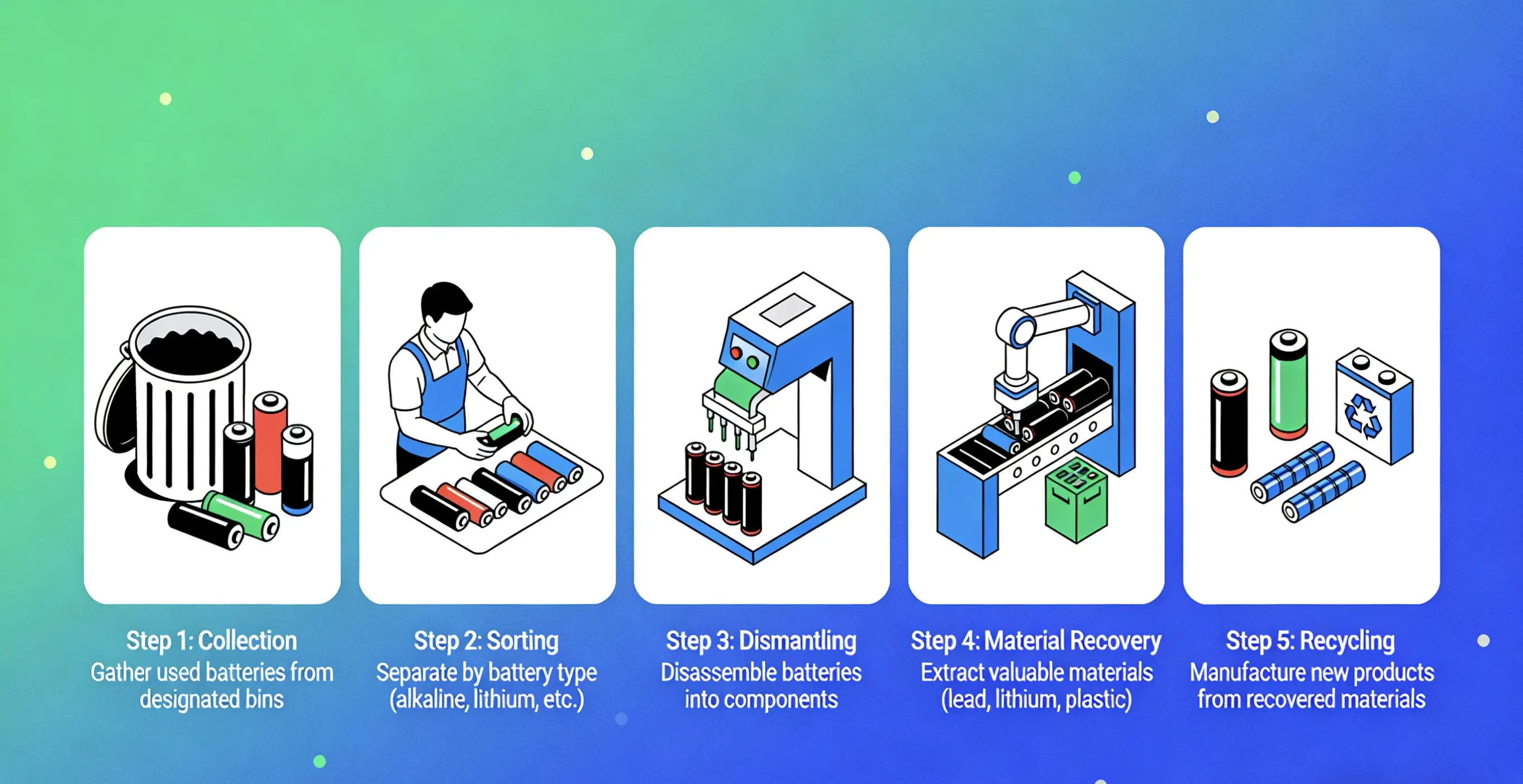
As global vehicle production rises, safe battery recycling requires robust thermal testing and discharge monitoring systems to prevent fire hazards during material recovery.
Verify battery cell and module integrity under various mechanical and electrical stresses.